






If you feel like the only way to write your novel is to clear big blocks of time, your backstage brain is about to become your new best friend.
If you’re trying to write a book while working, caregiving, or raising little kids, you already know how hard it is to get the writing done. You finally sit down, and something explodes in the kitchen, or someone needs help with homework. The pages you meant to write just keep disappearing into your imagination.
It is possible to keep your story moving, even with a full and demanding life. There’s one thing that can help make your writing dreams come true in the middle of all that chaos, and it’s not another standard productivity hack. Once you understand how to use your backstage brain, your work can start moving forward again.
When Your Backstage Brain Is All You Have Time For
When you don’t have much time to write, it’s easy to focus on the pages you’re not getting done. That’s where most writers put all their attention. We stare at the empty word counts and the missed sessions and decide we’re failing.
The problem is that if you only look at the time you’re sitting in front of the page, you’re missing the part of the process that can actually carry you through these busy times.
When you’re a writer, your writing life reaches beyond the minutes that you’re actually at the keyboard. There’s a part of the process that keeps going while you’re answering your emails, driving the kids to school, folding laundry, or taking care of everyone else.
It’s not something most of us are directly aware of, so we don’t really ever learn how to use it on purpose.
What Your Backstage Brain Does While You Fold Laundry
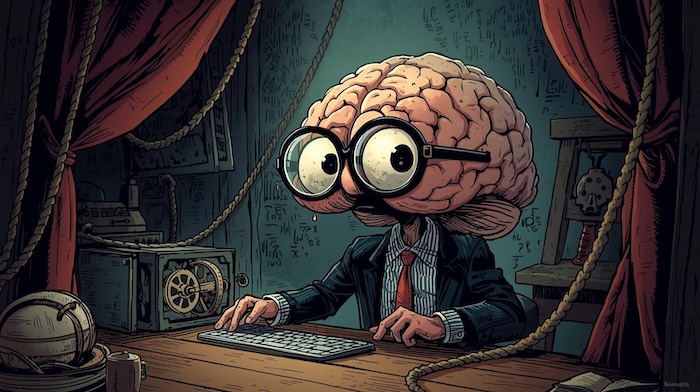
This part of your mind I like to call the backstage brain.
This is the part that keeps working on your story while you’re brushing your teeth, taking a walk, fixing the kids’ dinner, and doing all the other things that you do in your regular life.
As long as you give the backstage brain what it needs, it will keep working on your story while you’re doing these other things—which is really good news when life is busy and you’re pulled in ten directions at once!
So, what is this backstage brain, really? Is this just a nice idea, or is this something real?
The Science Behind Your Backstage Brain
Neuroscientists have found that when you’re not focused on a task—when you’re daydreaming in the shower, staring out the window, or walking the dog—a whole different network in your brain lights up. Scientists sometimes call it the default mode network, and it’s heavily involved in imagination, memory, and stitching together ideas in the background.
Research has linked this default mode network to creative thinking and idea generation, especially when you’re mentally wandering rather than staring straight at the problem.
There are also decades of studies showing that when people take a break and let their minds wander, they often come back with more creative ideas and better solutions than people who just keep grinding away at the problem without resting. This “incubation” time—when your conscious attention is elsewhere—can boost creative problem-solving.
In other words, stepping away while your attention drifts can actually help your brain connect the dots, which in turn can help you write faster when you actually get a moment to sit down.
That is your backstage brain at work. It will do this for you, but only if you know how to prep it in the right way.
Tiny Scene Touch: Feeding Your Backstage Brain
One of the simplest ways to wake up your backstage brain is what I call the tiny scene touch.
On days when you’re busy, you’re not sitting down to write for half an hour. You’re opening your project for just a few minutes and touching one small part of it.
That might mean adding just a single line of dialogue, tweaking one little detail in the setting, or jotting a quick note like: Tomorrow, she finds the text she wasn’t supposed to read.
Then you close the document and go about your day.
It might seem silly to you if you try this. You open up your laptop, pull out your file , go to the last paragraph you wrote, and add a piece of dialogue. Or you add a detail to the setting. Or you read that paragraph and then shut the laptop again.
That took you maybe three minutes, and it can feel like nothing. But it can be really helpful.
The Science Behind These Quick Dips Into Your Writing
Psychologists have a name for what you’re giving your brain here: incubation. Once you have engaged with a problem or a creative task, stepping away for a while can actually help your brain work on it in the background and come back with a better answer later.
There’s a whole body of research showing that breaks like this can boost creative problem-solving and insight, especially after you’ve already touched the work.
That tiny scene touch isn’t pointless. It’s you handing your backstage brain a fresh thread to pull on while you go do everything else.
The important thing is to immerse yourself enough in those three minutes to get the story back into your brain. Then you go about the rest of your life. And when you finally do get even fifteen minutes to sit down and write, your brain is ready. It’s been noodling over this and can help you write that next scene a lot faster.
If you’re in a season where your days feel jammed and you’re constantly on the edge of burnout, this is also where a resource like my book Overwhelmed Writer Rescue can support you. It’s packed with practical ways to carve out breathing room in your schedule so the tiny scene touch feels possible again, instead of like one more thing on your list.
Give Your Backstage Brain a Question to Carry
There’s another way you can prep your backstage brain: give it a specific question to carry around for the day.
I love how this works.
It might sound like:
- “What is my character really afraid of in this next scene?”
- “What’s the next thing that would go wrong if I let it?”
- “How can I get my characters out of this chapter without a boring transition?”
You’re not forcing an answer here. You’re just planting the question in your head and then moving on.
One really good way to do this is to write the question down on a sticky note or in your file or somewhere in your writing notes. Even better is putting that sticky note on the mirror in the bathroom or on the refrigerator, where you’re likely to see it.
You can also type it into your phone and set an alarm that will bring up that question once or twice throughout your day, reminding your backstage brain that it has work to do.
You’re Tapping Into Brain Incubation
There’s a line of research on unconscious thought and creative incubation that suggests when you give your brain a clear problem and then shift your attention to something else, it can quietly keep working on that problem in the background and sometimes come back with better solutions than if you’d just sat there grinding away on what to do next.
So that one sentence you throw at yourself before work is a real prompt for your backstage brain. It keeps the story simmering while you’re answering emails, commuting, or making dinner.
Then the next time you get to sit down, you pull that sticky note off the mirror or pull it up on your phone and see if your brain has an answer for you. Often it will. And even if it doesn’t, most likely it’s been noodling over it enough that you can write down at least a few lines very quickly.
This helps you feel like you’re making progress on your story again. In truth, you really are, because you’ve got the story alive in your head. Your backstage brain is working on it. Your job is to record what you’re figuring out as you go about the rest of your life.
Let Your Backstage Brain Use Repetitive Chores
The next tip is for all the time you spend doing repetitive tasks like the dishes, laundry, house cleaning, mowing the lawn, shoveling snow, or waiting to pick someone up.
Pick one tiny moment from your story. It might be a heated exchange between characters, an awkward silence, or the second before a secret comes out.
Then replay that ten-second clip in your mind while you do this mindless chore.
You don’t have to run the whole plot. You’re just letting yourself watch that one little beat and notice what wants to happen next.
Think of it like that scene from a movie that you really liked that you keep replaying in your head, only this time it’s your scene. It’s your movie. What are the characters wearing? Where are they? What does it smell like? What are they doing and feeling?
Replay all this in your head while you’re doing the dishes. Run the scene over and over until you’ve filled in all the details. Then run it again to be sure you don’t forget it.
This works because when your attention isn’t pinned to a demanding task, your brain shifts into the default mode network we talked about before. That network tends to light up when you’re doing something mindless like laundry or commuting, and it’s strongly linked to creative thinking and to making new connections between ideas.
Basically, that zoned-out-while-doing-the-dishes time can actually be your story time if you point your mind at one small moment and then let the backstage brain play with it.
It’s pretty cool.
Some Authors Wrote Entire Novels In Their Heads!
And just in case you don’t believe me that this is possible, there are some famous stories of authors who created entire books in their heads without getting them written down until later.
One example is Aleksandr Solzhenitsyn. He composed One Day in the Life of Ivan Denisovich entirely in his head by reciting it daily while he was in a Soviet gulag.
It is absolutely possible to create an entire novel in your head without actually writing it down. I’m not saying you should do that. I’m saying: think about the next short scene in your head so that when you have a chance to write it, you can do it really quickly because it’s already there.
Catch What Your Backstage Brain Sends You
My last tip is about catching what your backstage brain sends you so that none of this feels pointless.
It’s great if your backstage brain creates all these wonderful things. But if you don’t get those things down somehow, they can fade away before you get back to the story. That can make all that quiet work feel wasted.
So try this: Pick one place to park the little bits that show up during the day. That could be a single notes app, a tiny notebook in your bag, or a simple running document.
Anytime a line pops into your head, you suddenly see a scene clearly, or you notice a new detail that you didn’t notice before, drop a few messy words in this place you’ve chosen and then go back to what you were doing.
Psychologists sometimes talk about something they call cognitive offloading, which is basically using tools outside your head—like notes—to reduce how much your working memory is trying to hold on to at once.
So even if Solzhenitsyn was able to hold his whole novel in his head, I doubt that would be easy for the rest of us! At some point, we need somewhere we can dump this stuff really quickly.
Other Options for Offloading Your Backstage Brain’s Ideas
Another thing that works is using a voice memo or speaking an email to yourself. Just speak what you’re seeing from the scene and send that email to yourself so you can use it later when you sit down to write.
This frees up more mental bandwidth for actual thinking and creativity instead of using all your energy trying not to forget everything you thought of in the car. And you can keep your backstage brain humming on the next scene and the next by offloading the information that it’s giving you regularly.
Here’s another powerful result of this: The more you offload the information somewhere, the more you teach your backstage brain that what it’s doing is valuable. That can compel it to work even harder and deliver even more information to you.
It’s a little like exercising. The more you exercise every day, the more energy your body produces so that it’s ready for this exercise. The brain responds in a similar way. The more you challenge it to work on this story while you’re doing everything else in your life—and then you offload that information and challenge it again—the more you’re building that muscle so that it can work even more efficiently for you.
Give Your Backstage Brain a Job This Week
This week, give your backstage brain one clear job to do. Just one.
Maybe once a day, on whatever device you usually write on, you open your project for just five minutes and touch one tiny part of your story.
Like we said before, you read a couple of paragraphs, add a line of dialogue, help out a description, or just type a quick note to yourself like: figure out what he’s hiding in this scene.
Then—and this is the important part—you close it and go live your regular life.
Your only rule for the rest of that day is this: when your mind drifts, come back to that one question or that tiny moment from that scene. While you’re driving or washing dishes or standing in line, let your backstage brain play with it for a minute instead of letting your thoughts spin out in a hundred other directions or defaulting to your phone.
Try this every day for a week. No pressure to rack up huge word counts. Your whole goal is just to notice what changes when your story gets this daily attention, even on the days when you don’t have time to write.
If you start to feel your story waking back up a little, that’s your backstage brain telling you that it’s still in there and it’s working with you, even in the middle of a really full, busy, demanding life.